Capital for distributed energy assets.
We exist to accelerate Latin America's energy transition by securitizing distributed renewable assets for institutional investors.
We facilitate the financing of behind-the-meter battery storage for the middle market across the region, creating ABS from the contracts those assets serve.
Infrastructure capital needs scale. Operators need capital to reach it.
Behind-the-meter storage in Latin America is being built by small, capable companies holding long, contracted cash flows, and funding hardware with equity, because nothing else is available at their size.
Infrastructure funds, private credit, broadly syndicated loans and traditional bank loans already finance these assets, often one at a time, with large tickets in the hundreds of millions if not billions of dollars.
Middle market renewable energy operators originating smaller ticket energy contracts, who lack the size and scale for traditional funding sources.
That interval is where we work. We fund the operator's installed, contracted assets so that by the time the infrastructure conversation becomes real, there is a portfolio worth underwriting, and we are repaid out of it.
Contracted storage, already in the ground.
Commercial and industrial battery systems sitting behind a customer's meter, under a signed supply or service contract, generating metered savings from day one.
Installed and performing
Systems that are commissioned, metered and already collecting from a paying customer. We underwrite performance that has happened, not performance that is forecast.
Contracted revenue
A fixed, contractual obligation from a creditworthy commercial counterparty, not exposure to a spot market or a share of a number that moves.
Capital for the energy transition is concentrated in the blue-chip market.
Renewables already supply around 60% of Latin America's power, more than twice the global average, which leaves the region's grids cheap at midday and expensive at dusk. That is the condition storage exists to arbitrage. The capital funding that transition has pooled in the largest markets and the largest tickets, and has not flowed down to the small and middle market, where most operators sit.
The same report naming those flows lists what holds private capital back: high cost of capital, fragmented regulation, and weak project aggregation: too few assets packaged into something an institution can underwrite. That last one is not a market condition. It is a job, and it is ours.
We start in Chile. It has the widest daily power-price spread in the region: system prices near zero at midday against an evening peak met by gas and diesel. It also has a capacity charge that dominates commercial bills, and a mature unregulated-customer market where the savings are already visible in metered data. What works there travels: the same contract structure, the same underwriting, a different grid code.
Built in Latin American specialty finance.
We met at a large Latin American NBFI, financing trade receivables across Brazil, Chile, Colombia and Peru. We see many parallels to the nascent days of factoring and specialty finance, and a significant opportunity to use technology and private capital to close the funding gap in the small and middle market renewable energy sector.
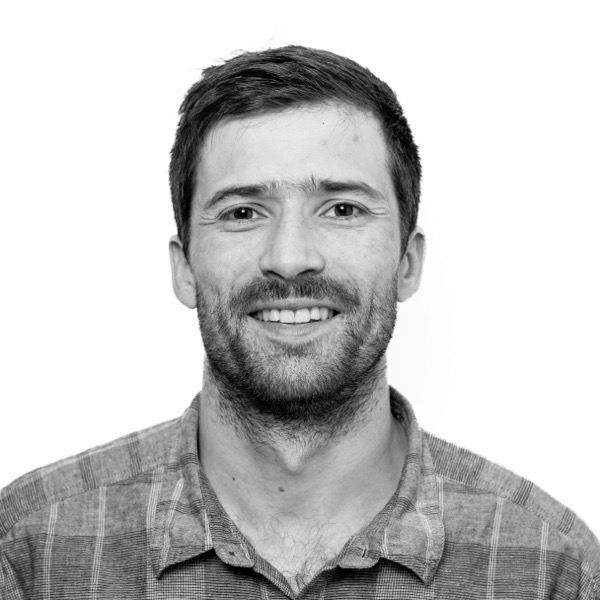
Engineer, PUC de Chile, who started his career in fintech credit and builds the technology that underwrites it. Serial entrepreneur. Based in Chile.

Ten years of banking, capital markets and private capital experience in the United States and Latin America. Based in the United States.
If you build it, operate it, or fund it, we would like to talk.
Operators and investors
We are early, selective, and more interested in a specific situation than a general introduction. Tell us what you are building or what you are looking for.